
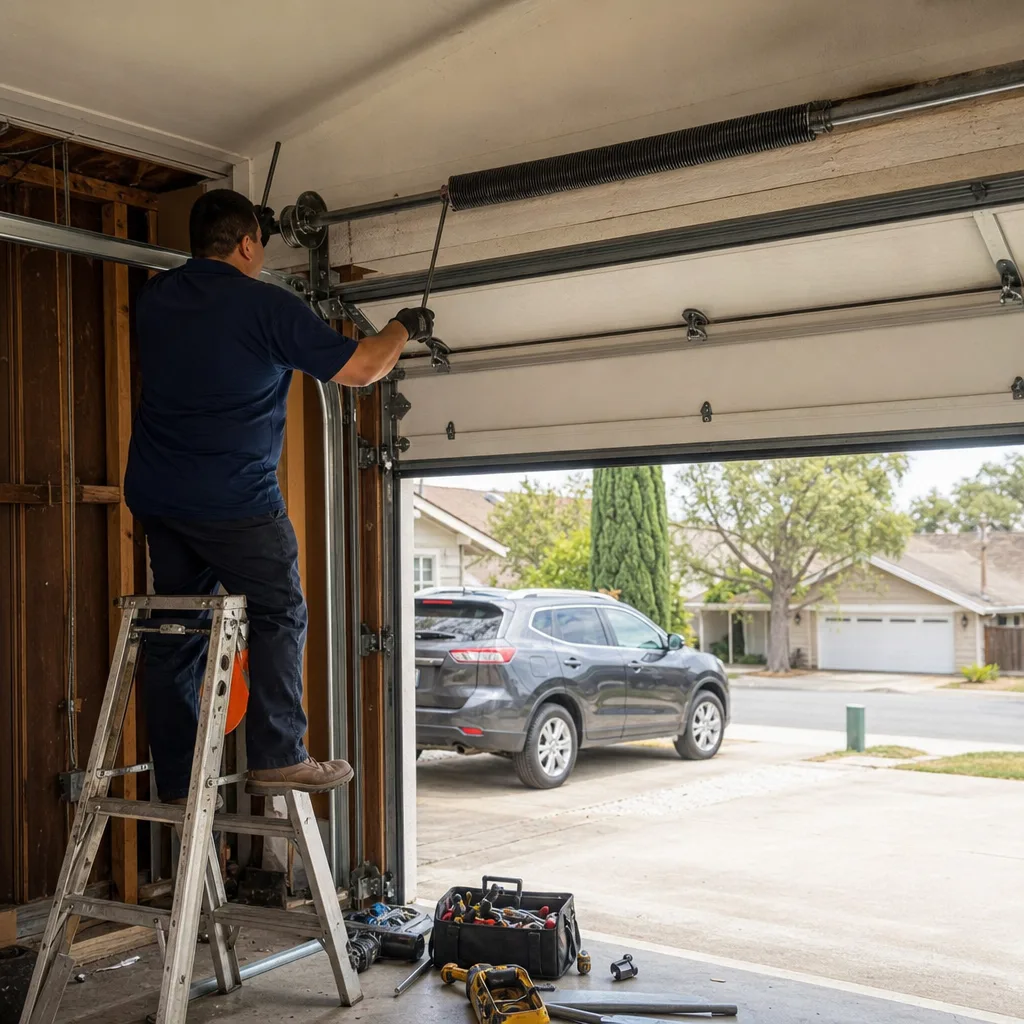
Last updated November 4, 2026
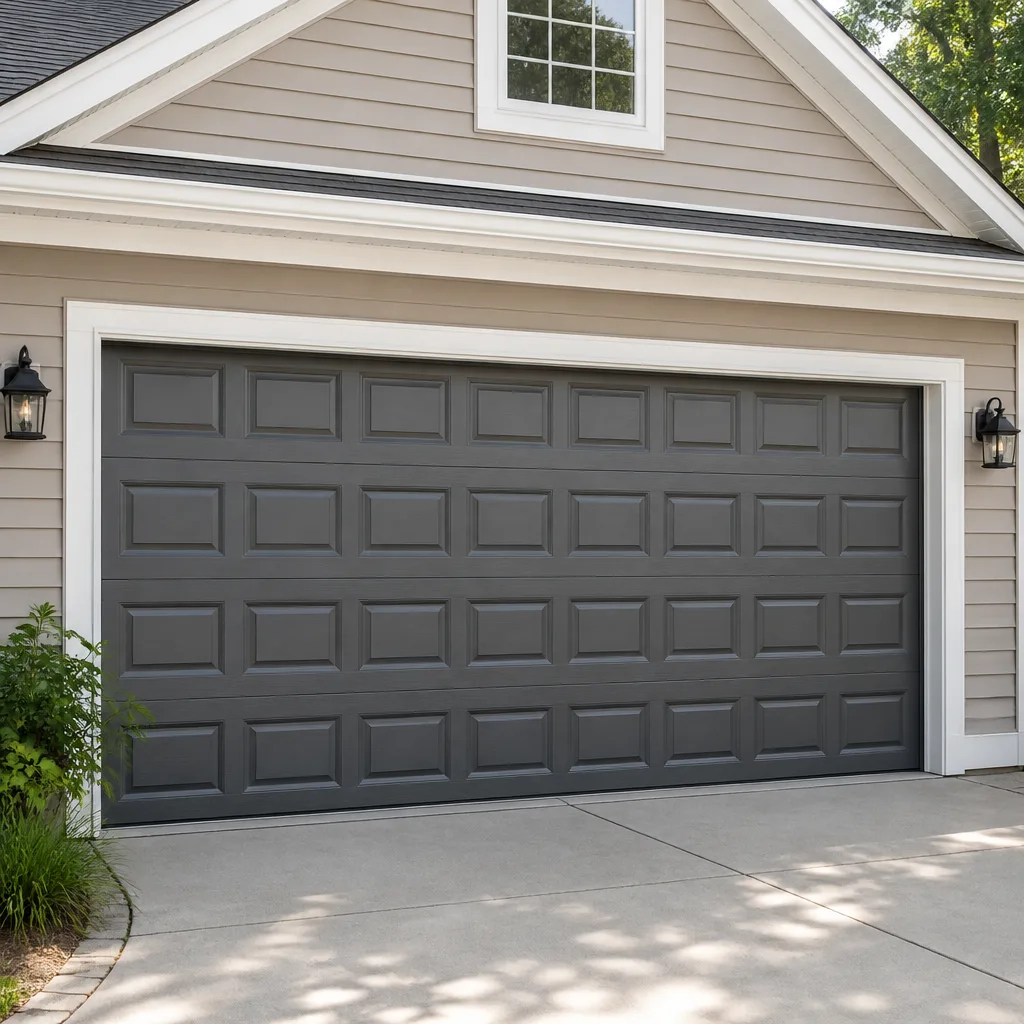 Raised-panel steel
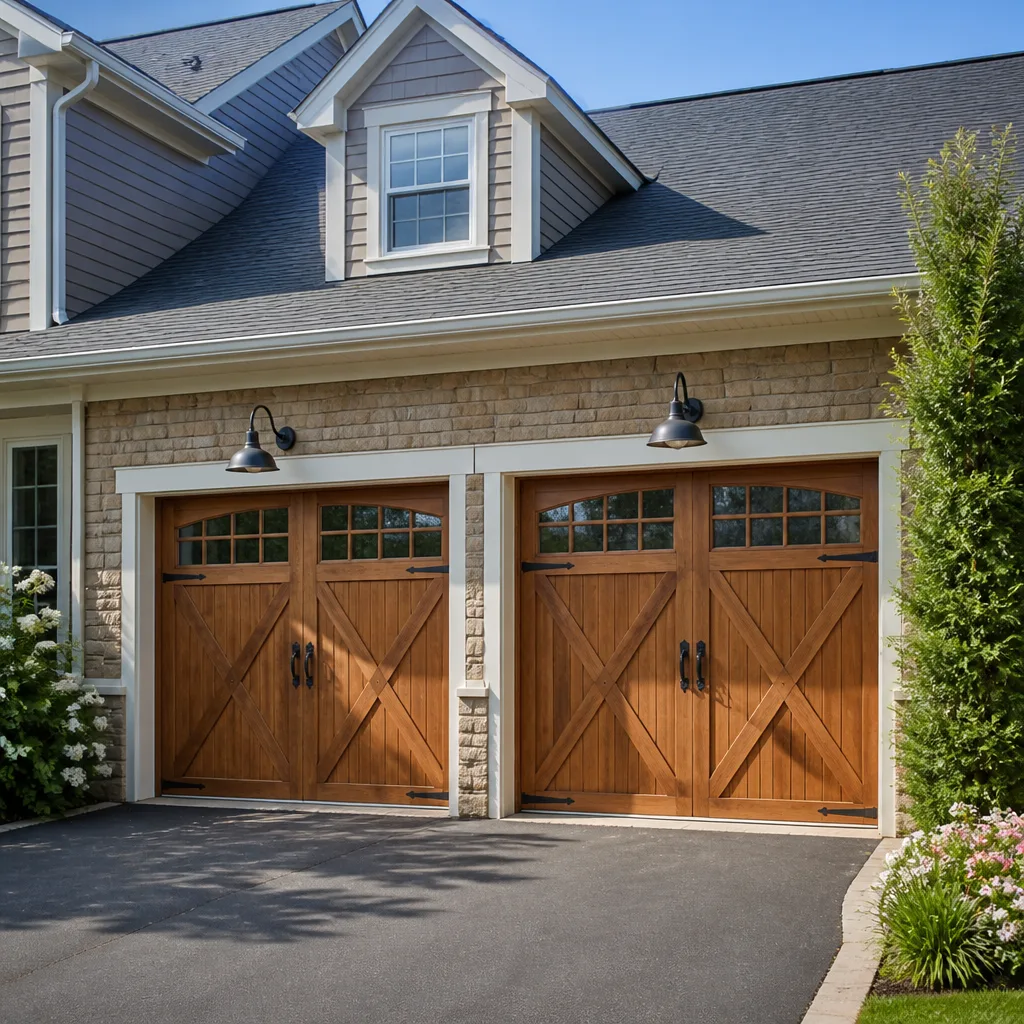 Carriage house
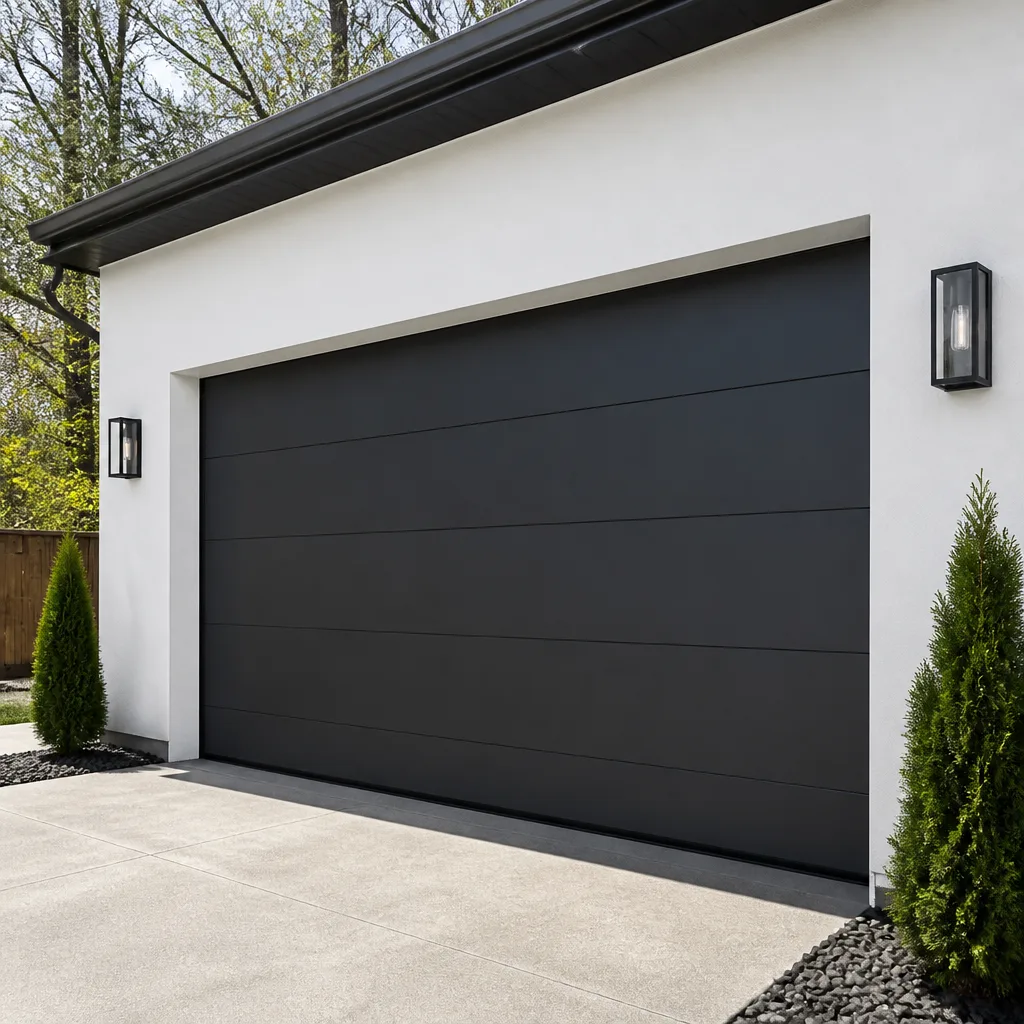 Modern flush
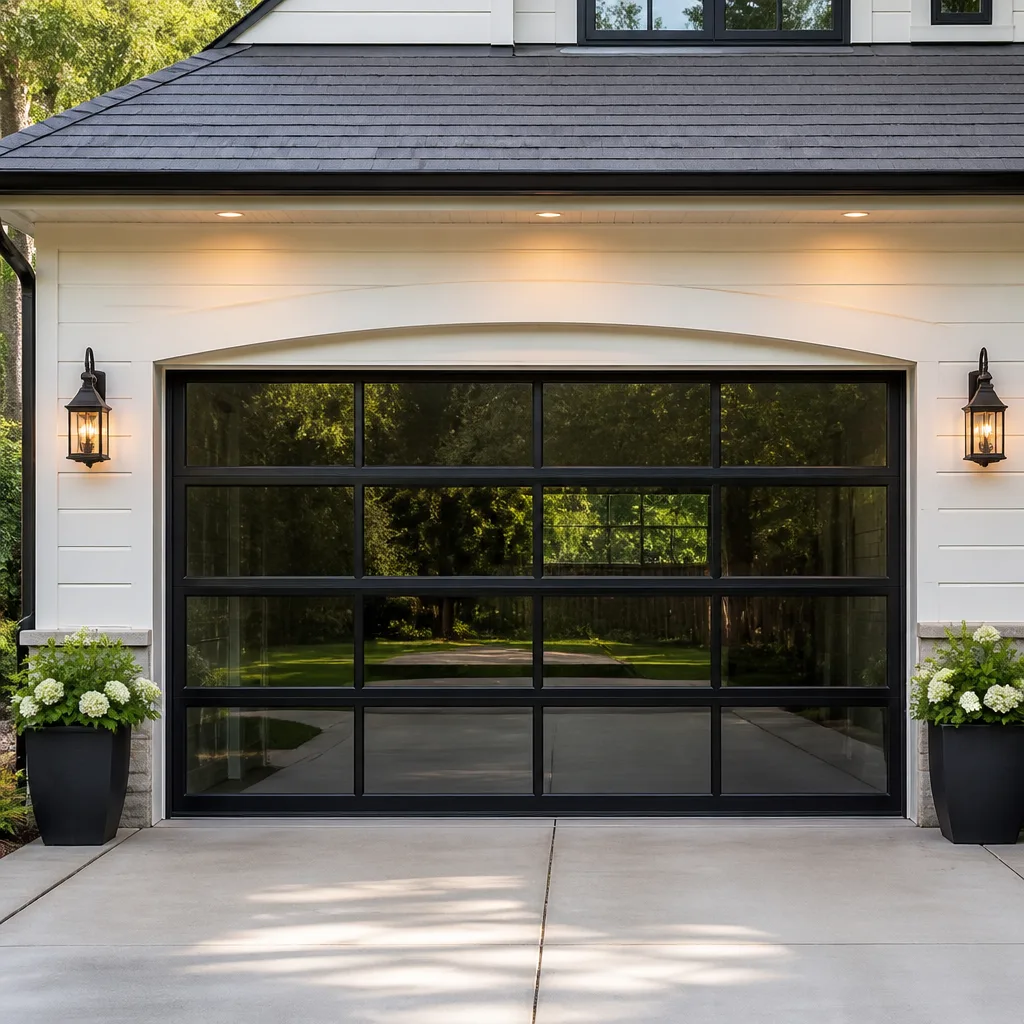 Full-view glass
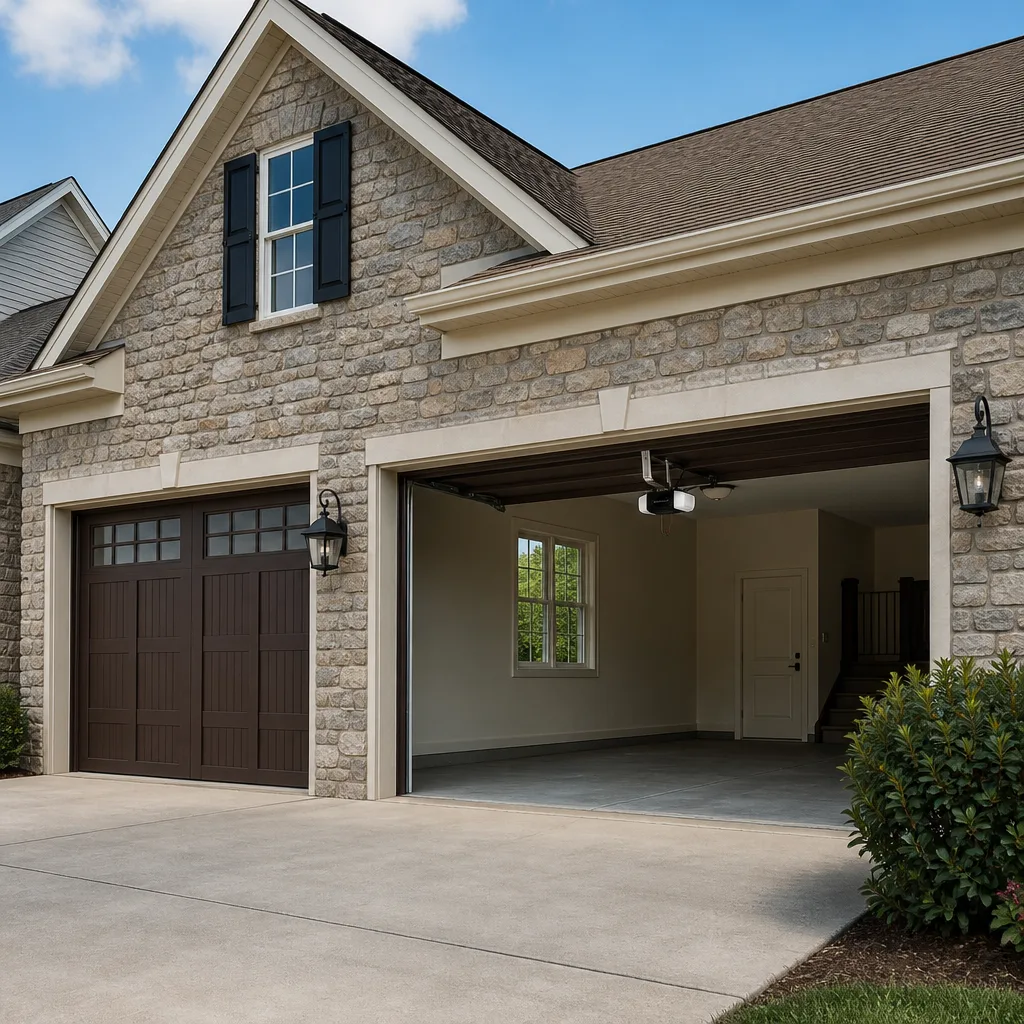 LiftMaster openers
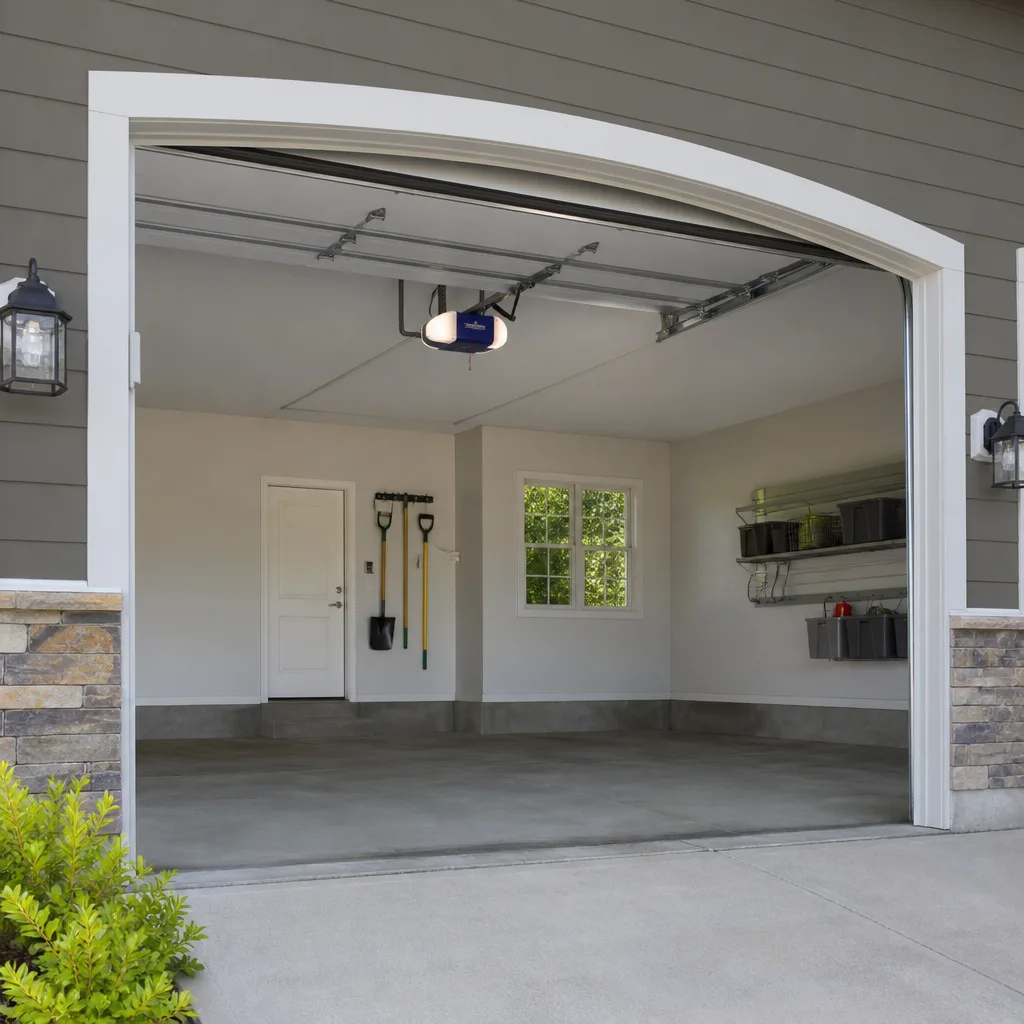 Chamberlain openers
Full 25-point door and opener safety check with every visit - springs, cables, rollers, tracks, and your LiftMaster or Chamberlain opener included
You get a price before we start. It does not change when the truck arrives.
Get your free estimateGarage Door Repair Troubleshooting in Livermore: Common Problems and How to Fix Them
The number-one wasted service call we see starts the same way: a homeowner has already changed the remote batteries, already pressed the wall button, already unplugged and replugged the opener, and still can’t tell us one simple thing. Does the door move at all, or does it just ignore the remote? Those are two completely different problems with two completely different fixes, and mixing them up is how a $40 sensor alignment turns into a $300 opener replacement nobody needed. This guide walks through the symptom-first way a specialist reads a garage door in Livermore, so you can narrow the culprit before you spend money on the wrong part.
Quick Answer
Garage door troubleshooting in Livermore starts with one question: what exactly does the door do when you press the button? A door that won’t move at all usually points to the opener, a door that moves partway and reverses points to the sensors or spring tension, and a door that moves but sounds wrong points to rolling hardware or lubrication. Matching the symptom to the system is faster and cheaper than replacing parts by guesswork.
Styles & brands we work with
- Raised-panel steel
- Carriage house
- Modern flush
- Full-view glass
- LiftMaster openers
- Chamberlain openers
Table of Contents
- Symptom First: Read the Failure Before Touching Anything
- Door Won’t Move at All: Opener or Power Supply
- Door Moves Partway and Reverses: Sensors, Springs, or Travel Limits
- Door Moves but Sounds Wrong: Hardware, Rollers, and Lubrication
- Torsion vs. Extension Springs: Same Symptom, Different Culprit
- How Livermore Weather Affects Your Garage Door
- What You Can Safely Check Yourself
- Common Mistakes to Avoid
- When to Call a Professional
- Frequently Asked Questions
Symptom First: Read the Failure Before Touching Anything
Most garage door problems announce themselves with a specific symptom: a sound, a movement pattern, a failure mode. That symptom alone can narrow the culprit to one or two parts before a technician ever touches the door. Livermore homeowners who call us with a clear description of what the door does, rather than what they think is broken, tend to get a faster diagnosis and a smaller invoice. The reason is simple: a door that grinds halfway up, a door that jerks side to side, and a door that starts then slams back down are three different failures in three different systems, and no amount of opener programming fixes a hardware problem.
Here is the diagnostic tree we work through, in the order we work it:
- Does the door move at all when you press the wall button? If no, the problem is power, the opener, or the wall control. If yes, move to the next question.
- Does the door move with the wall button but not the remote? That is a signal problem, not a door problem. The remote, the antenna, or the opener logic board is the target.
- If the door moves, does it complete the full cycle? A door that stops partway and reverses is usually a sensor or force-setting issue. A door that completes the cycle but sounds wrong is usually rollers, hinges, or a spring that is losing tension.
- Does the door move evenly, or does it wobble, bind, or lean? Uneven movement points to cable, track, or spring balance issues, and those cross into professional territory quickly.
This order matters because it separates electrical failures from mechanical failures before any money gets spent. A homeowner who skips to replacing the opener when the door is merely off balance has just bought a new motor for a door that still won’t close right.
Door Won’t Move at All: Opener or Power Supply
When a Livermore garage door ignores every button, the first check is whether the opener has power at all. Check the outlet the opener plugs into, not just the wall switch controlling the garage lights. In many Livermore homes the garage outlet is on a GFCI circuit, and a tripped GFCI in the garage or even an exterior outlet on the same circuit will kill the opener completely. Look for the little reset button on the outlet itself and press it once.
If the opener has power and the lights on the unit do not respond, the wall control may be the problem. A short in the wall button wiring will tell the opener to do nothing even when the remote works fine. Try the remote. If the remote opens the door but the wall button does not, the wall control or its low-voltage wire is the culprit. If neither works, the opener’s logic board may have failed, and this is where a brand-fluent eye helps. We work on LiftMaster, Chamberlain, Genie, Clopay, Amarr, Wayne Dalton, Craftsman, and Raynor, so when a logic board or motor needs replacement, the diagnosis and the part are the same call.
One more Livermore-specific note: power flickers during summer heat waves and the occasional winter storm can confuse an opener’s travel limits. If the door worked yesterday and does nothing today after a brownout, unplug the opener for 60 seconds, plug it back in, and try the wall button before calling anyone. If the door still will not move, the motor or capacitor may have taken the hit, and that is a same-day garage door opener repair call, not a wait-and-see situation.
Door Moves Partway and Reverses: Sensors, Springs, or Travel Limits
A door that starts to close, gets partway down, and reverses back up is the single most common complaint we hear in Livermore, and the cause is almost always one of three things. The photo-eye sensors at the bottom of the door tracks are misaligned or dirty. The travel limits on the opener have drifted. Or the spring tension has changed and the opener thinks it is hitting an obstruction.
Start with the sensors. Livermore’s summer dust and winter fog leave a film on the sensor lenses that can block the infrared beam. Wipe both lenses with a dry cloth, check that the small indicator lights on both sensors are steady and not flickering, and make sure the brackets are pointed at each other. A sensor knocked askew by a trash can or a bicycle is the entire problem more often than not, and the fix takes 30 seconds. This is a safe test for any homeowner.
If the sensors are aligned and the door still reverses, the travel limits or force settings may have drifted. Most openers have adjustment dials or buttons, and after a power interruption the unit can lose its stored positions. Reprogramming the limits is possible on many models, but the exact procedure differs by brand: a Chamberlain uses a different sequence than a Genie, and guessing wrong can make the door slam harder. If you are not sure of the sequence for your opener, this is where a technician who already knows the brand saves you an afternoon of YouTube dead ends.
The third cause, spring tension, is where we stop the DIY conversation. A door that reverses because the springs are weak will feel heavy when you lift it manually, and a door that feels heavy in manual mode is telling you the springs are failing. That is not a settings problem, and it is not something to adjust at home. High-tension springs hold enough stored energy to cause serious injury, so the moment the balance test feels wrong, the next call should be to a pro for garage door repair.
Door Moves but Sounds Wrong: Hardware, Rollers, and Lubrication
A door that completes its full cycle but gets louder every month is usually complaining about rolling hardware, not the opener. The most common sound is a grinding or scraping noise from the track area. That sound is a worn roller or a dry hinge, and it usually gets worse in Livermore’s summer heat because metal expands and the track alignment shifts slightly. A roller that was quiet in the cool morning will scrape in the afternoon sun.
Lubrication is the cheapest fix and the most often skipped. Use a silicone or lithium spray on the hinges, the rollers that are not nylon-capped, and the track where the roller rides. Do not use WD-40 on the track: it cleans but does not lubricate, and it leaves a residue that collects dust. A few seconds of spray per hinge, once or twice a year, will quiet most metal-on-metal noise. If the noise persists after lubrication, the roller bearings themselves are worn, and a worn roller will eventually grind flat spots into the track.
Another distinct sound is a popping or banging that happens as the door moves through a particular section. That is usually a hinge that has pulled loose from the door section or a track bracket that has shifted. Tightening hinge bolts is fine for a homeowner. But if the sound comes with visible cable slack or a door that leans to one side, stop. Cable and track issues under spring tension can fail violently, and those are the red-flag combinations we tell Livermore homeowners never to test by hand.
Brand matters here too. A Clopay or Amarr sectional door uses different hinge spacing than a Wayne Dalton one-piece design, and a roller that fits one will not always fit the other. We carry cross-brand knowledge so the replacement part matches the door the first time.
Torsion vs. Extension Springs: Same Symptom, Different Culprit
Most guides ignore this distinction, but it is the single most useful piece of garage door knowledge a homeowner can have. A torsion spring door has one or two springs mounted on a metal shaft above the door opening. An extension spring door has springs that run along the horizontal tracks on either side of the door. The same symptom, a door that feels heavy or stops partway up, points to different culprits on each system.
On a torsion spring door, a door that stops partway up and feels heavy usually means one of the two springs has broken or lost tension. When one spring breaks, the opener is suddenly doing the work of two springs, and it either stalls or the door climbs unevenly. The broken spring itself may be visible as a gap in the coil, but do not get close enough to look: the remaining spring is still under full tension. A torsion spring replacement is never a homeowner job, period.
On an extension spring door, the same symptom is often a stretched spring or a broken safety cable. Extension springs lose tension gradually rather than snapping all at once, so the door slowly gets heavier over months. Homeowners often don’t notice until the opener starts struggling. The safety cable runs through the center of each spring, and when it is frayed or missing, the spring can become a projectile if it breaks. That cable is the difference between a controlled repair and a dangerous failure, and it is why we do not recommend homeowners adjust or replace extension springs themselves.
If you are not sure which system you have, look at the area above the closed door. Springs running side to side above the opening are torsion. Springs running front to back along the tracks are extension. Knowing which one you have before you call saves diagnostic time and helps the technician show up with the right parts for your door.
How Livermore Weather Affects Your Garage Door
Livermore’s climate does not freeze pipes or dump snow on your roof, but it does punish garage doors in ways most national guides miss. The summer heat in the Tri-Valley regularly pushes afternoon temperatures into the nineties, and that heat does two things to a garage door every year. It expands the metal track, which shifts alignment slightly and makes a marginally aligned door scrape or bind. And it thins the grease on older openers and springs, which changes how the door moves and how the opener’s force sensor reads the load.
An opener that reverses in the afternoon but works fine in the evening is almost always a heat-related force setting issue. The motor reads the extra resistance from the expanded track as an obstruction and reverses. Lowering the force setting is the wrong fix. The right fix is usually a track alignment check and fresh lubrication, not reprogramming the opener to push harder.
Winter brings the fog, and fog brings condensation that sits on exposed metal. The photo-eye sensors we mentioned earlier are the first things to fog over, but the bigger long-term effect is on hinges and springs, which start to develop surface rust in the damp cycle. A spring with surface rust is not necessarily a failed spring, but it is a spring to watch. Livermore’s mild winter means no freeze-thaw stress, but the damp-summer heat-damp cycle is its own kind of wear, and the fix is a consistent lubrication schedule that treats the seasons as two different maintenance moments.
Spring tension also shifts with temperature. A spring that is correct on a 55-degree morning is slightly stiffer on a 95-degree afternoon. That shift is not enough to break a healthy spring, but it will expose a spring that is already near the end of its cycle life. If your door behaves differently on hot days than cool days, the spring is telling you it is tired, and a spring that is tired in August will be dangerous by November.
What You Can Safely Check Yourself
There are three tests a homeowner can run safely, and there are limits to every one of them. The line between a safe check and an injury is whether you are touching something under tension. Springs, cables, and anything attached to a spring are never in the safe zone, no matter how simple the job looks on video.
Here is what you can do:
- Manual disconnect test. Pull the red release handle while the door is closed. Then lift the door by hand. A balanced door should lift smoothly to about waist height and stay there on its own. If it drops, the springs are weak or broken. If it is so heavy you can barely move it, the springs have failed. Close the door carefully, re-engage the opener, and call us. Do not try to hold a heavy door open while you inspect anything.
- Sensor wipe and alignment check. Clean both photo-eye lenses with a dry cloth. Check that the indicator lights are steady. If one is blinking, the beam is interrupted or the sensor is out of alignment. Adjust the bracket by hand if it is loose. This is the only sensor adjustment we recommend.
- Visual track check, from a safe distance. Stand at the side of the door and look down the track. You are looking for obvious gaps between the track and the wall brackets, or for the track itself looking bent or no longer parallel to the door edge. Do not stand under the door and do not loosen any track bolts yourself.
What crosses into injury territory: touching a torsion spring, adjusting a spring cone, removing a cable, or loosening a bottom bracket. A torsion spring under tension can release enough stored energy to cause severe injury in a fraction of a second. The moment a test leads you anywhere near a spring or cable, stop. That is the entire rule.
Common Mistakes to Avoid
- Replacing the opener when the door is the problem. A door that is off balance will burn out a new opener the same way it burned out the old one. Match the symptom to the system before spending on a new motor.
- Adjusting spring tension without knowing spring type. A torsion spring and an extension spring are adjusted differently, and a wrong move on either one is dangerous. Livermore homeowners who know which system they have can communicate the problem correctly, which is the whole point.
- Using grease on the track. Garage door tracks are not supposed to be greased. Grease collects dust and grime, especially in Livermore’s dry summer, and turns the track into a sticky mess that makes the door bind worse. Lubricate the rollers and hinges, not the track itself.
- Ignoring a door that reverses for months. A door that reverses sometimes is a door that will fail completely eventually. The force setting or sensor that is causing the reversal is not going to fix itself, and the final failure usually happens at the worst possible time.
- Changing the remote battery but not the wall button battery. Some wall controls have their own small battery, and when it dies the wall button goes dead while the remotes still work. It looks like a wiring problem and it is just a coin cell.
- Standing under the door while testing it. Any test that involves the door moving should be done from the side, never from directly beneath. A door that falls because the spring has failed does not give warning.
- Using a generic replacement part on a brand-specific door. A roller or hinge that fits a Clopay door will not always fit an Amarr or Wayne Dalton door. A part that is slightly off will wear the track and cost more than the right part would have.
When to Call a Professional
Some combinations of symptoms mean the door is beyond a homeowner safe zone, and the right move is an immediate call, not a troubleshoot session. A door off its track with slack in the cable means the cables and springs are no longer balanced, and attempting to re-seat the door by hand can release the spring violently. A door that is down but the opener motor is still running means the opener is disconnected or the travel limit has failed, and either way the motor is running against no load, which will burn it out quickly. A broken spring with a vehicle trapped inside is a self-explanatory emergency, but less obvious is a door that has moved unevenly for weeks and is now making a new sound every cycle; that sound is a part telling you it is about to fail.
Garage Door Repair Livermore offers free estimates in Livermore. Call (833) 593-6272, describe the symptom, and we will tell you what is likely happening and what the next step is before anyone rolls a truck. We answer 24/7. Fast dispatch from 7am to 7pm, Sunday through Friday.
Frequently Asked Questions
Our troubleshooting is part of the free estimate. Call (833) 593-6272, describe what the door is doing, and the price is set per job by the written estimate before any work starts. We answer 24/7. Fast dispatch from 7am to 7pm, Sunday through Friday.
Yes, fast dispatch from 7am to 7pm means same-day service is often possible for a door that will not open, especially when you describe the symptom clearly so we arrive with the right parts. Call (833) 593-6272 and we will get you on the schedule.
The price is set by the written estimate and agreed before any work starts. What you have in writing is what the job costs. The one exception is when the door reveals a second failure after the first repair begins, and in that case you get a new written estimate before that second repair is authorized.
We work on LiftMaster, Chamberlain, Genie, Clopay, Amarr, Wayne Dalton, Craftsman, and Raynor, and our trucks carry cross-brand hardware and common replacement parts so most repairs are completed in one visit. A brand-specific part that is less common can be ordered the same day.
No. A door that reverses in the afternoon heat is usually reacting to track expansion or a force-setting issue, not an actual obstruction. Livermore’s summer heat makes a marginally out-of-adjustment door act up, and the fix is usually alignment and lubrication, not a new opener. Call and describe the symptom; we can narrow it down over the phone.
Yes. Springs wear on the same cycle count, so when one fails, the other is not far behind. Replacing both at once restores balance and prevents another service call in a few months. A matched pair costs more than one spring, but it is still less than two separate repair calls.
The Bottom Line
Garage door troubleshooting in Livermore is a symptom-first act. A door that will not move is an electrical or opener problem. A door that moves and reverses is a sensor, limit, or spring problem. A door that moves but sounds wrong is a hardware or lubrication problem. Read the symptom, run only the safe tests, and stop the moment a spring or cable enters the picture. The goal is not to become a garage door technician; it is to know enough to describe the problem accurately and avoid paying for the wrong fix. When the symptom crosses into spring or cable territory, call (833) 593-6272 for a free estimate. We answer 24/7. Fast dispatch from 7am to 7pm, Sunday through Friday.
Written by the team at Garage Door Repair Livermore, serving Livermore since 2012.
See the difference
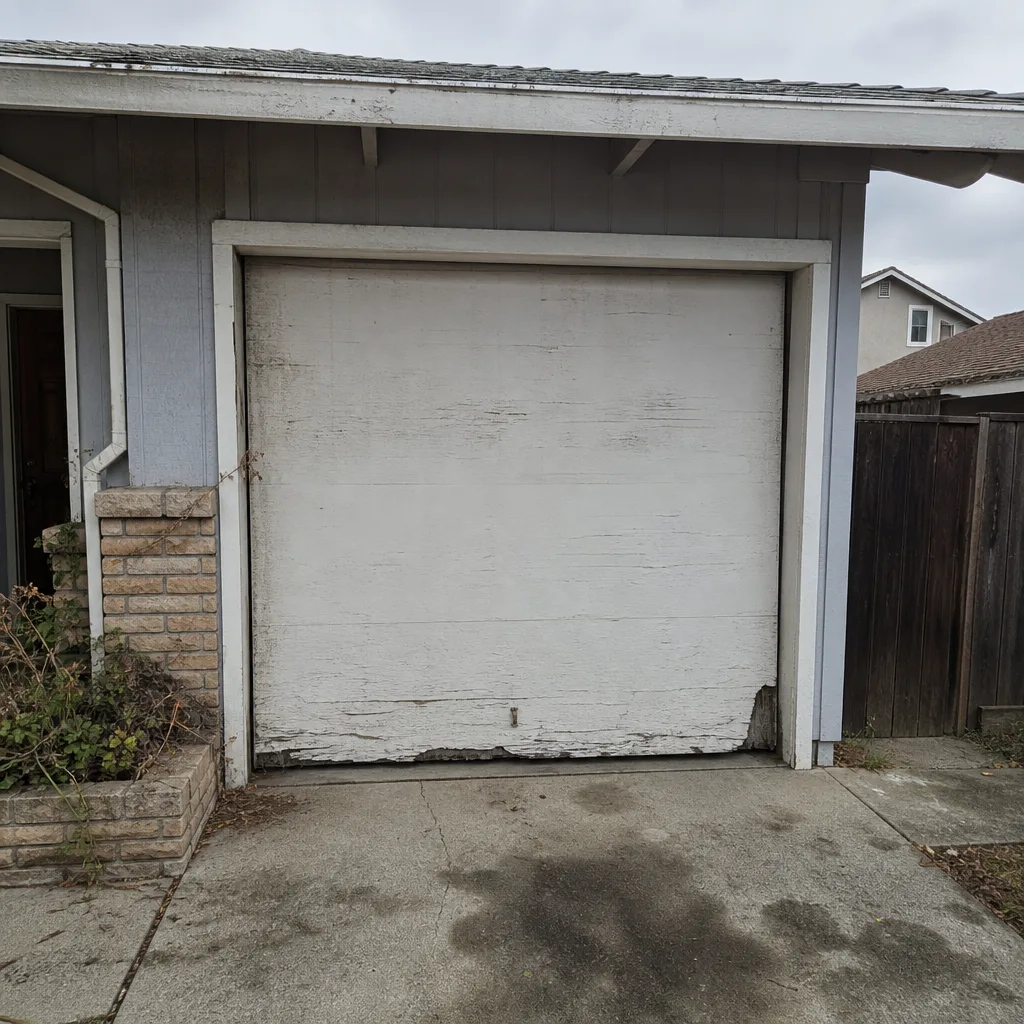 Before
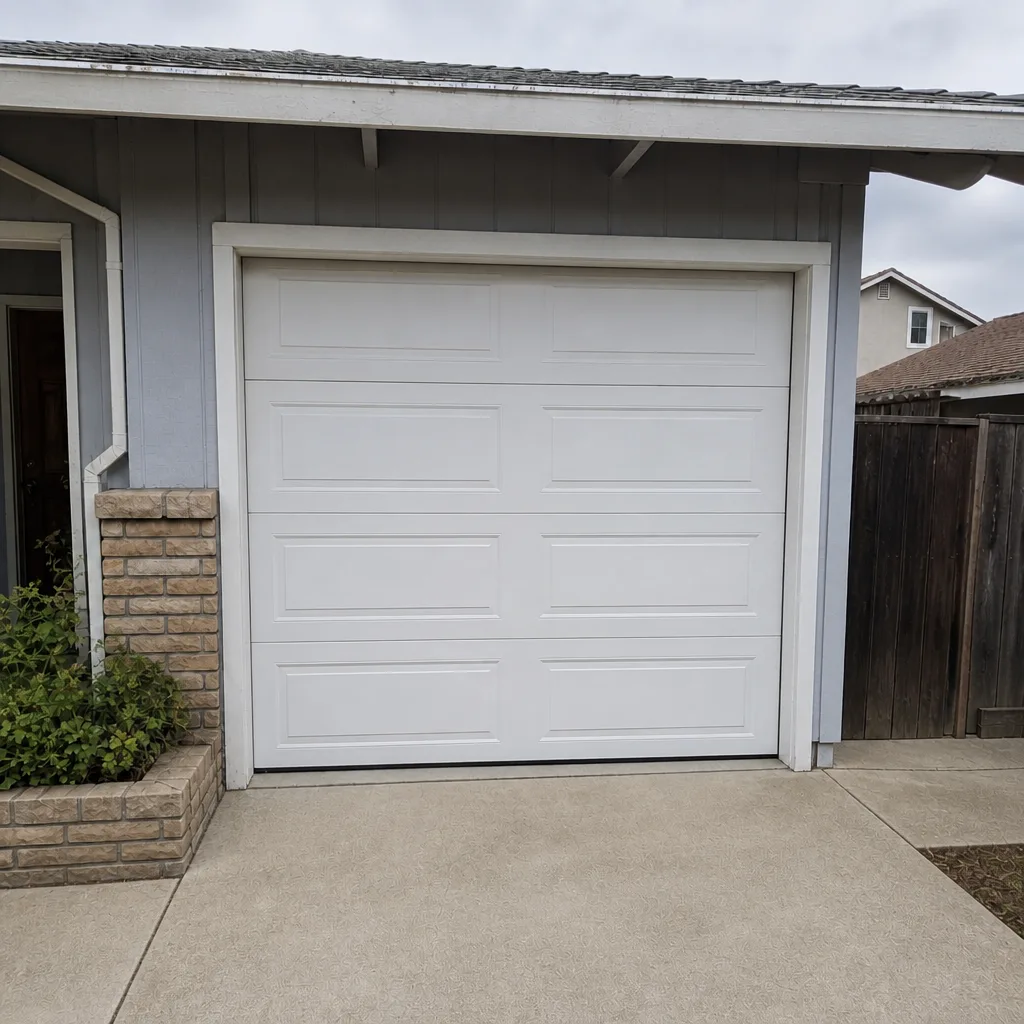 After
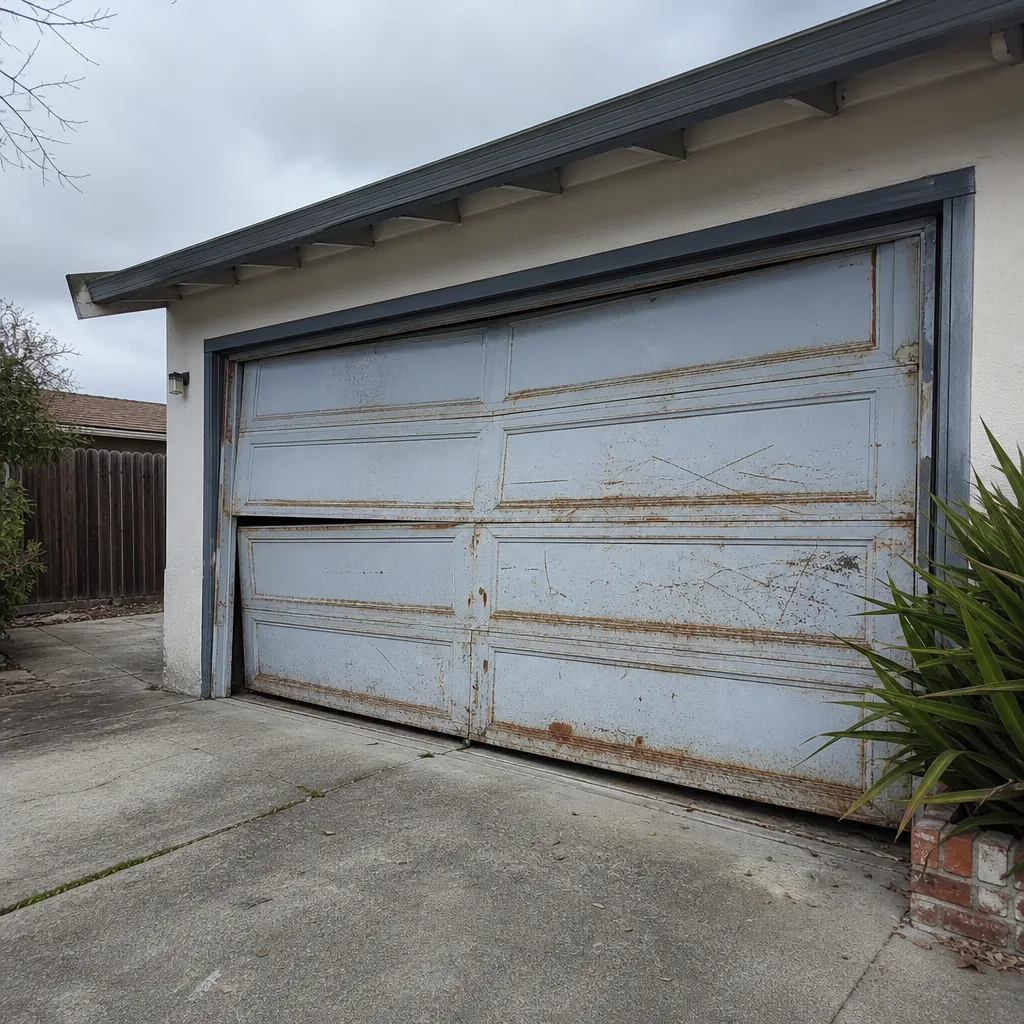 Before
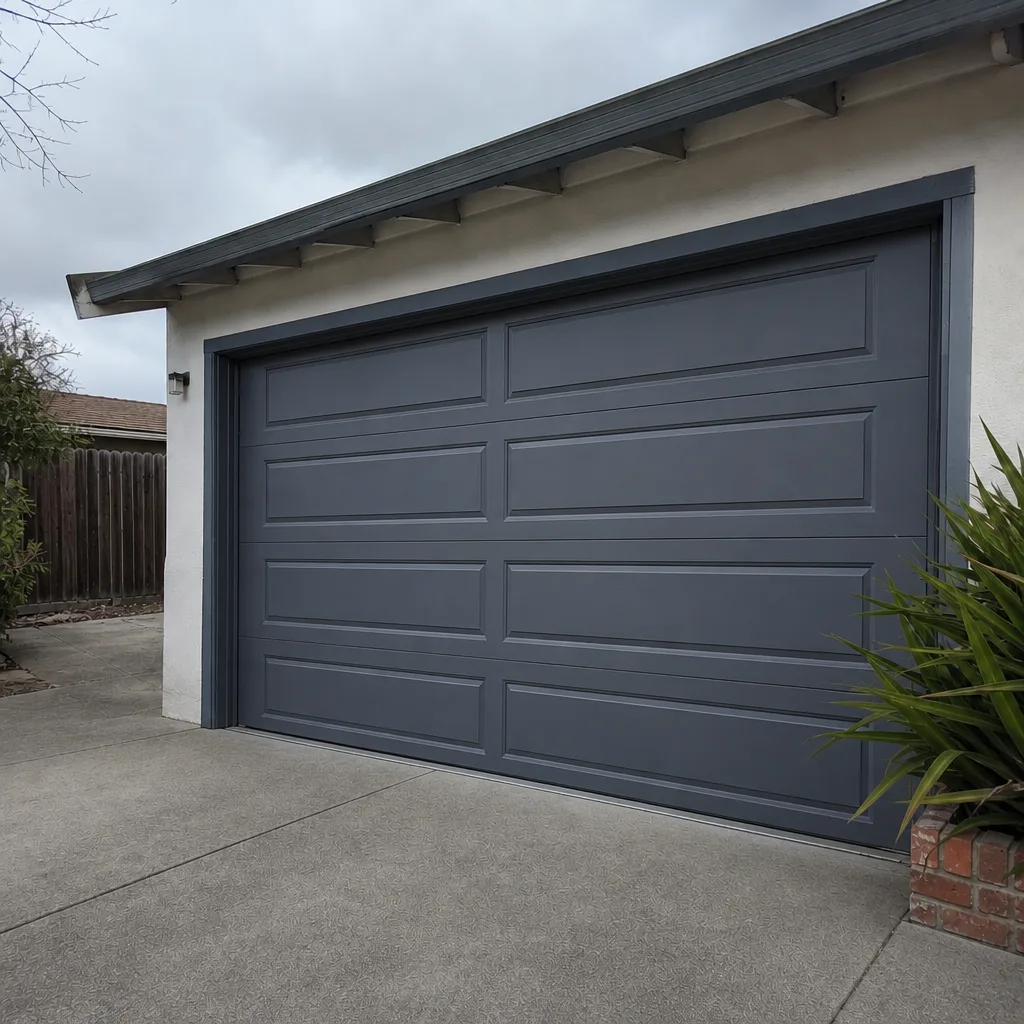 After
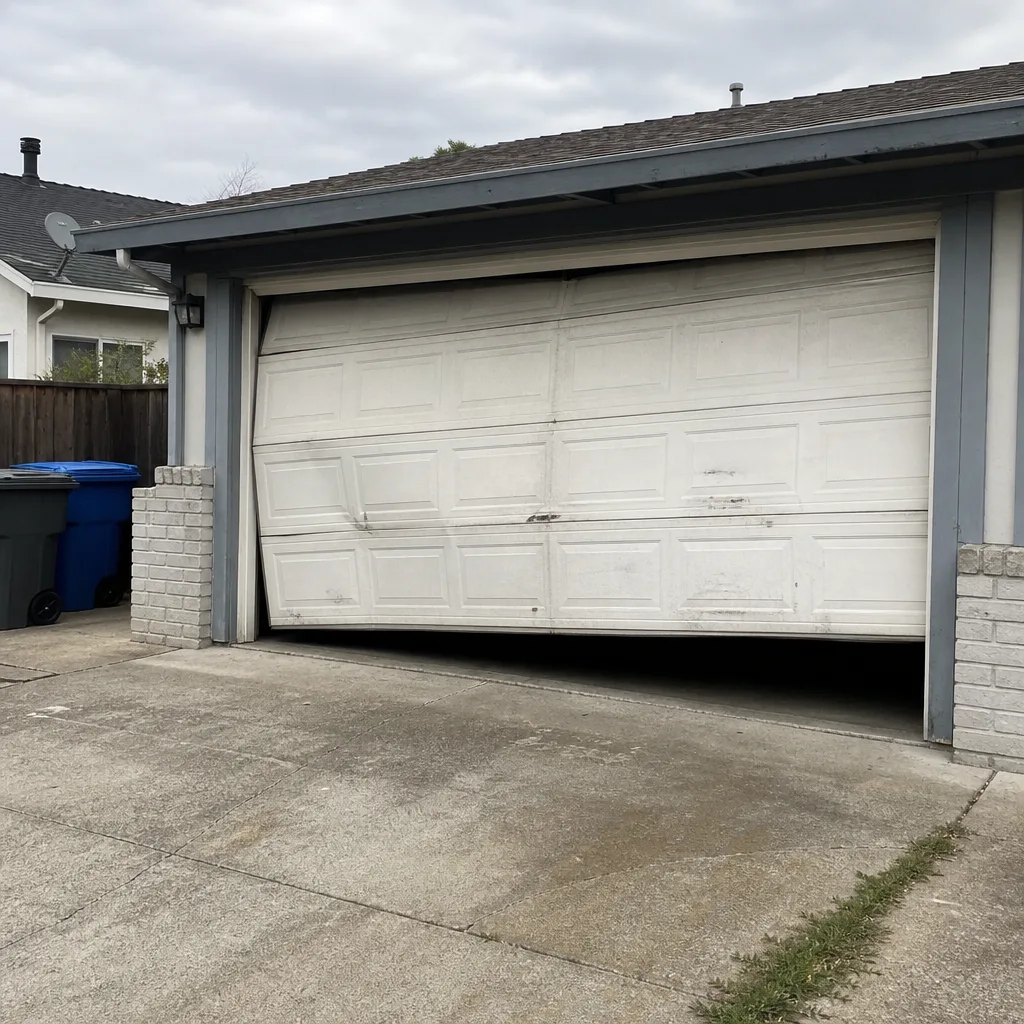 Before
 After