
Last updated November 4, 2026
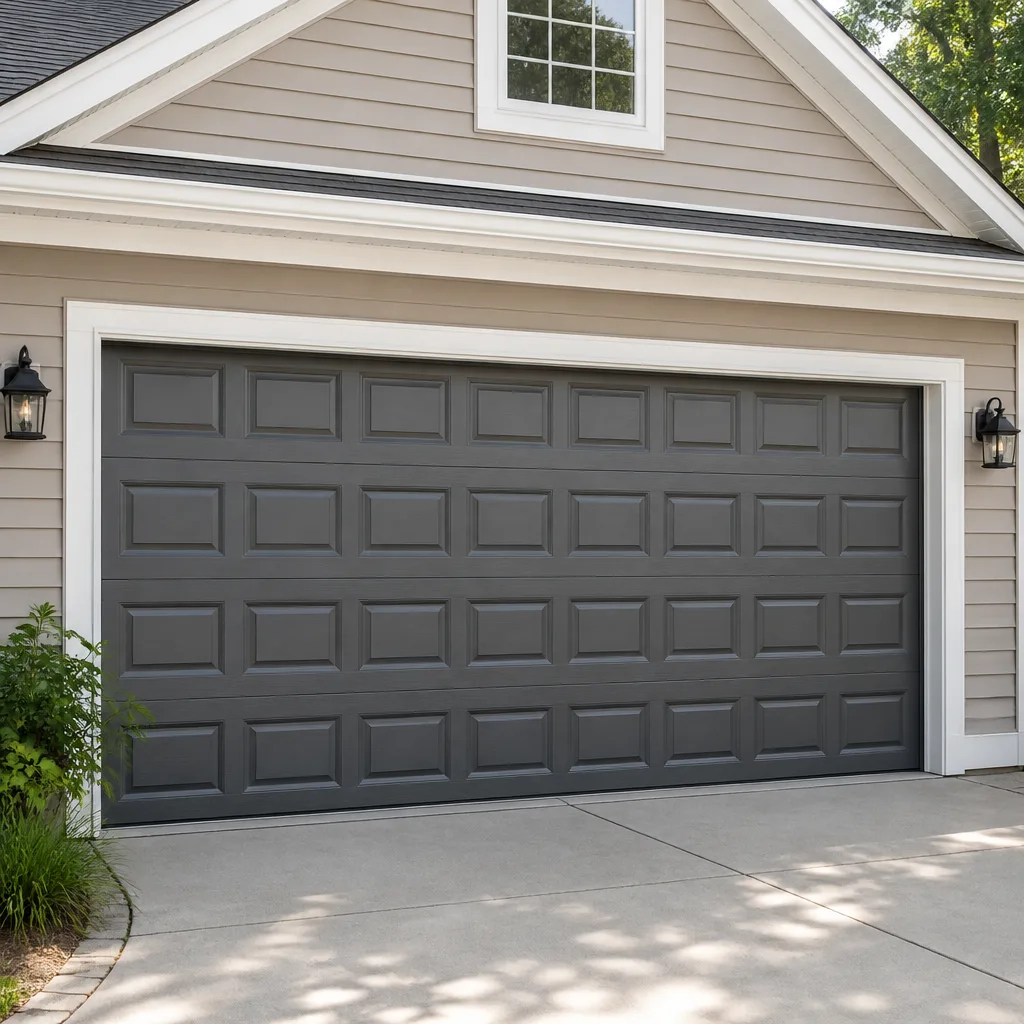 Raised-panel steel
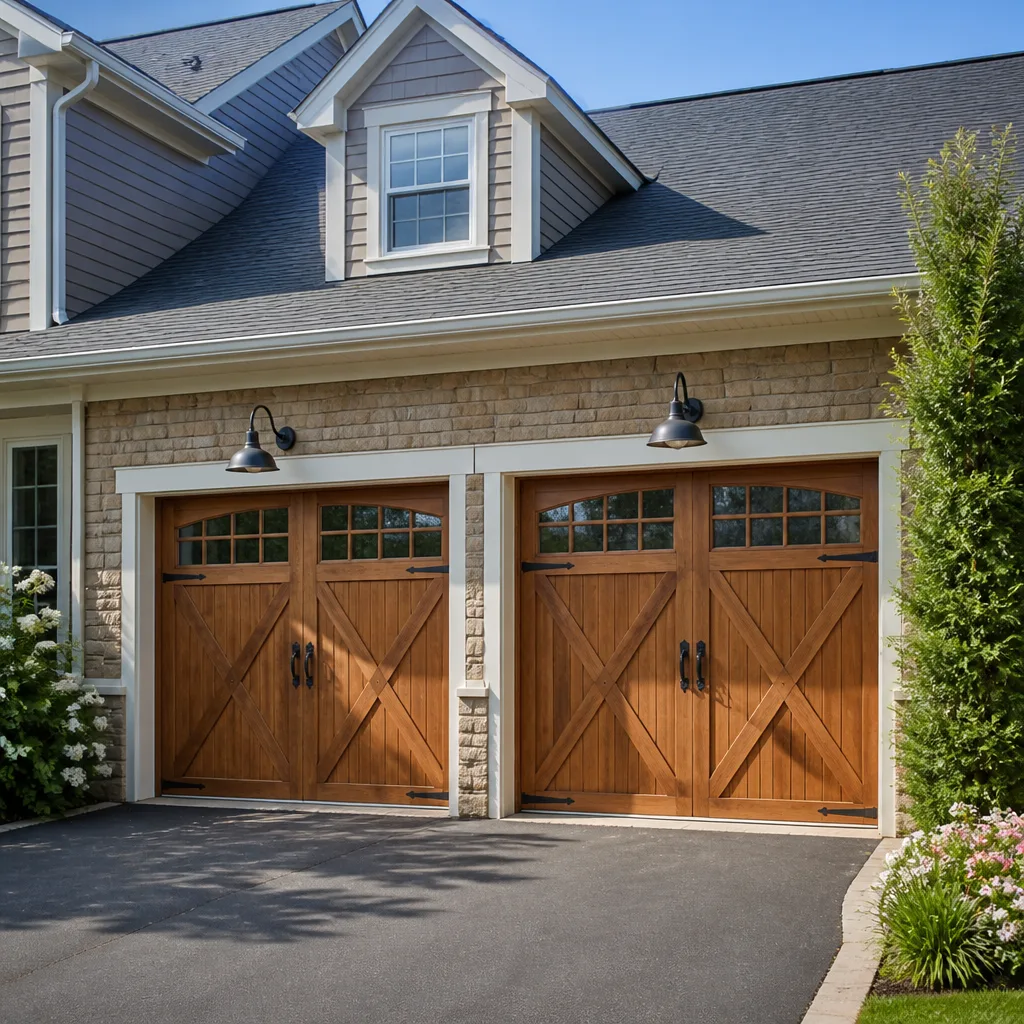 Carriage house
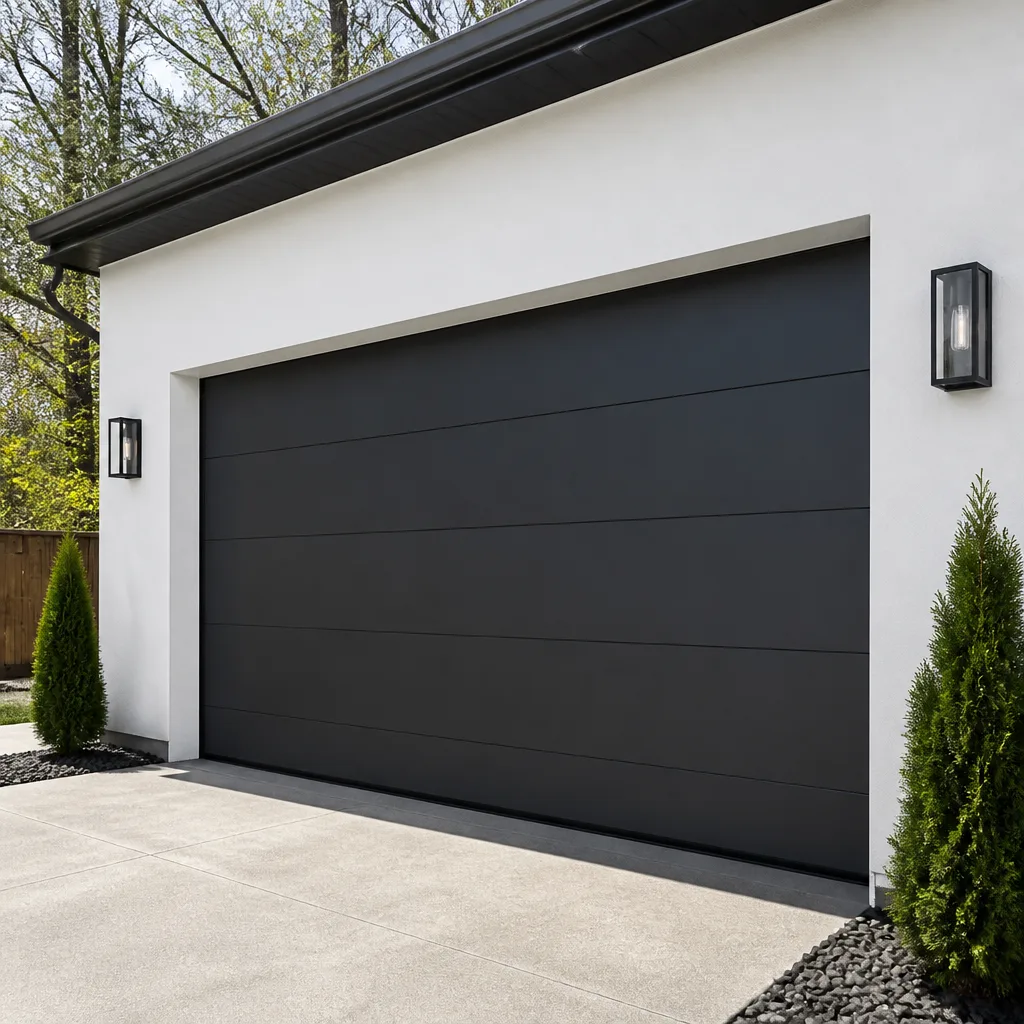 Modern flush
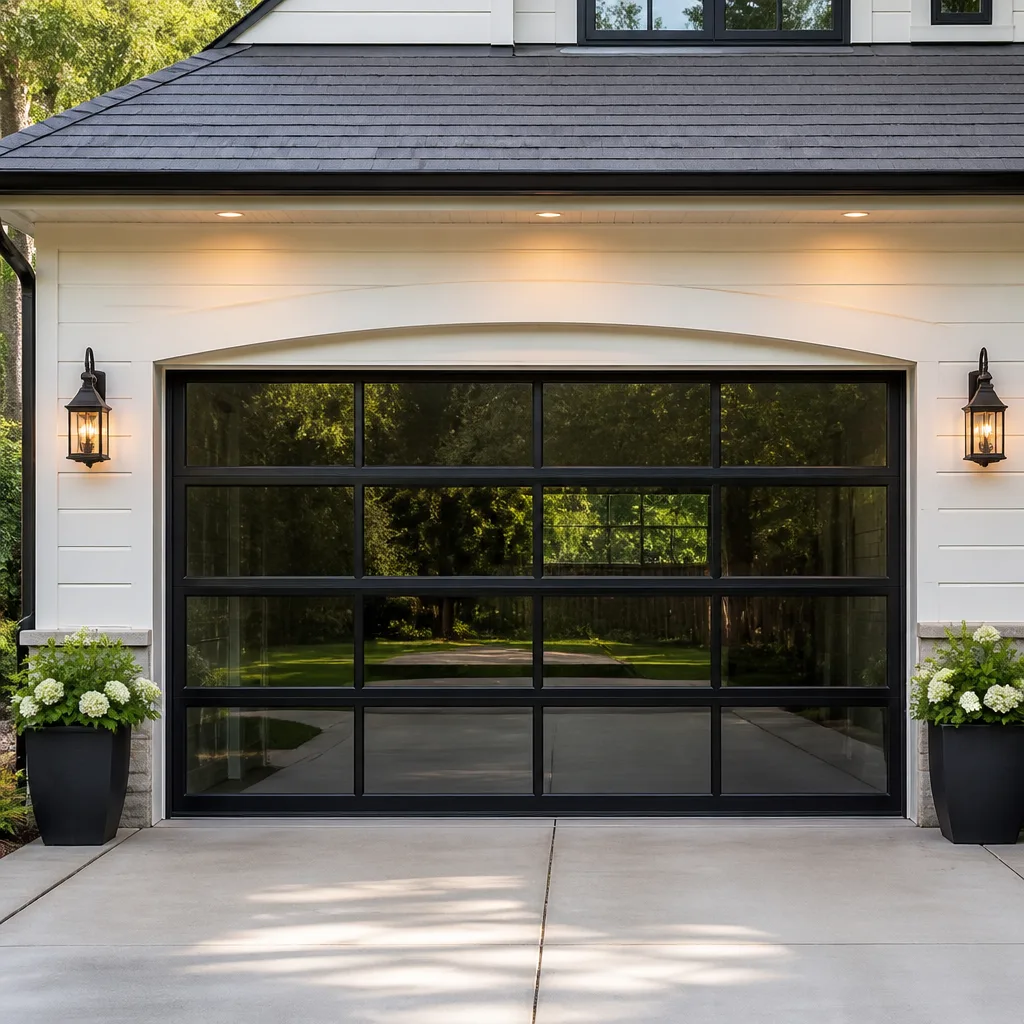 Full-view glass
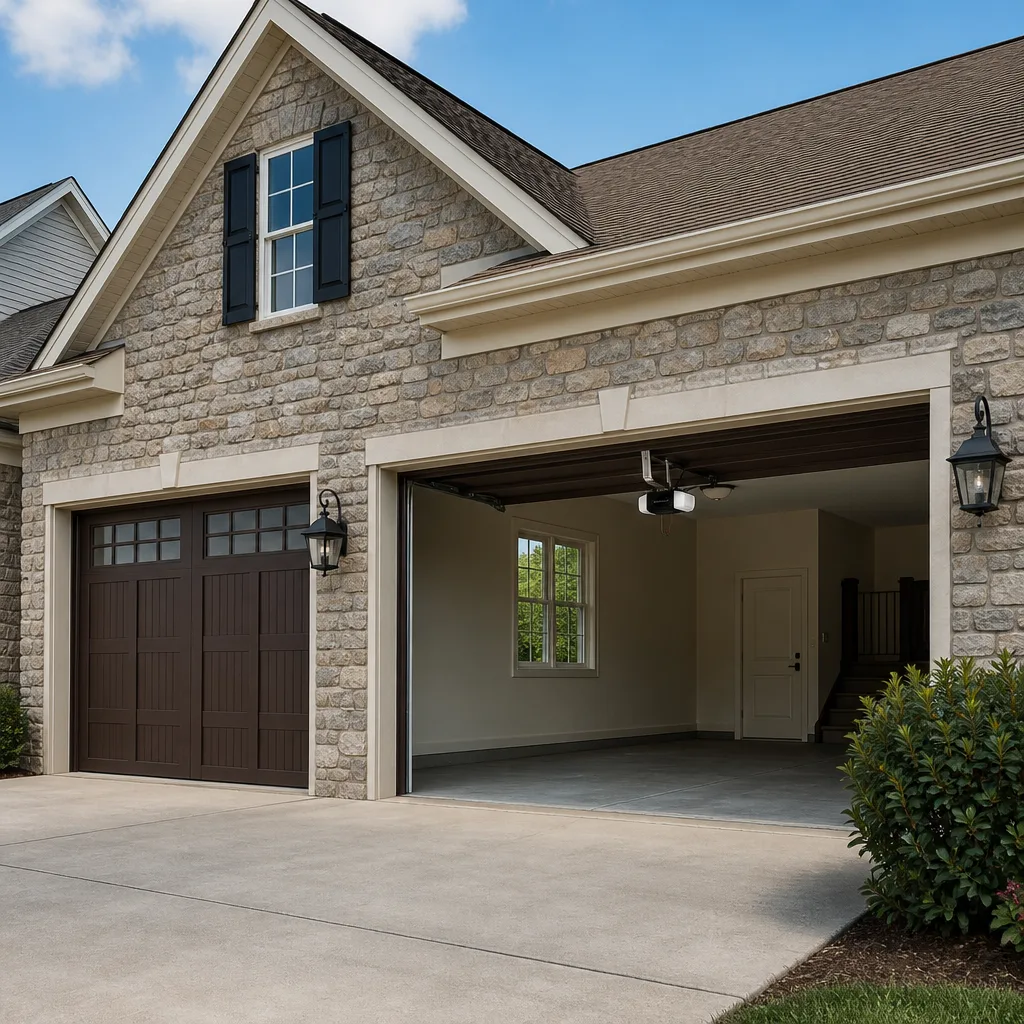 LiftMaster openers
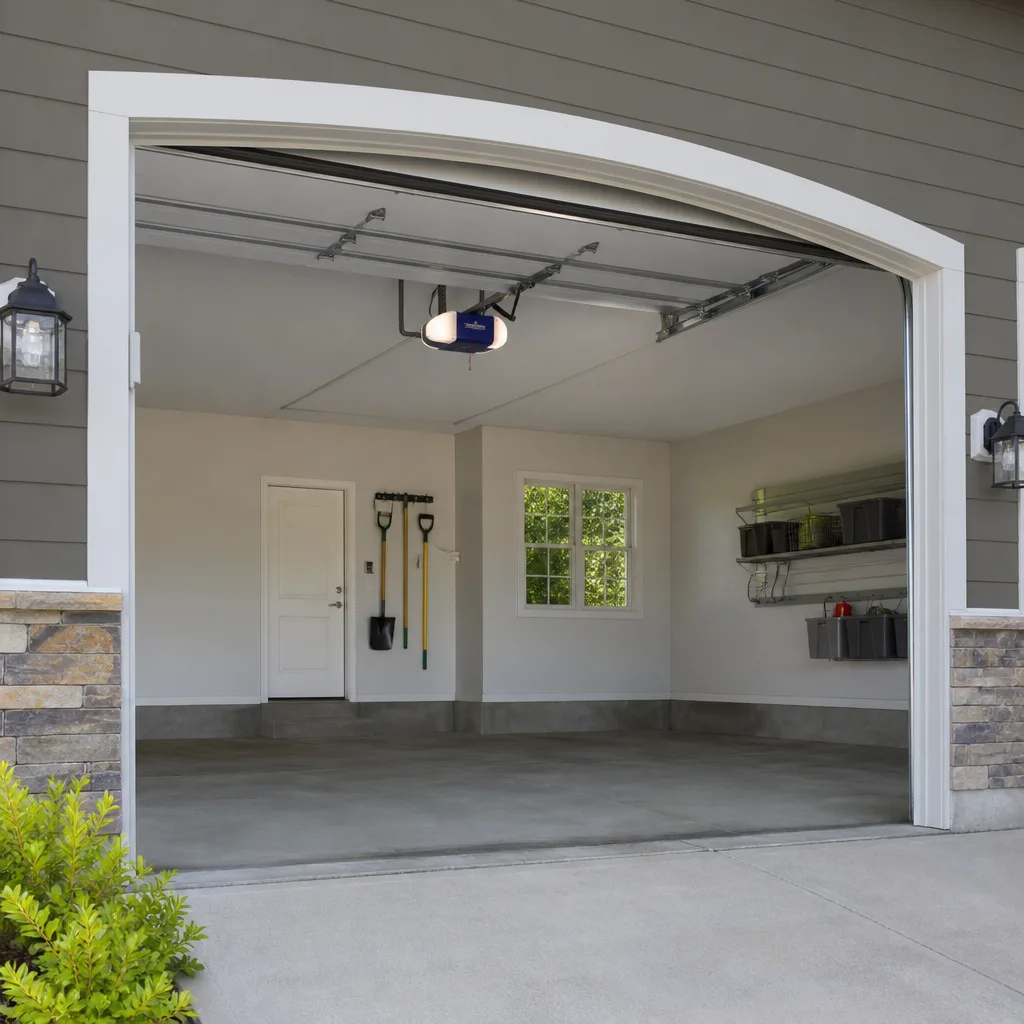 Chamberlain openers
Full 25-point door and opener safety check with every visit - springs, cables, rollers, tracks, and your LiftMaster or Chamberlain opener included
You get a price before we start. It does not change when the truck arrives.
Get your free estimateSeasonal Garage Door Care for Livermore: Year-Round Homeowner’s Guide
Most seasonal garage door advice assumes a climate with real winter. It talks about freeze-thaw cycles, ice buildup, and snow load. Livermore homeowners don’t face any of that. Our weather story is defined by summer heat that bakes seals until they crack, fall Diablo winds that push doors sideways, and damp winters that encourage rust in places you’ll never see. This guide follows the actual calendar in the Tri-Valley, so you’re checking the right things at the right time, for the conditions your door actually lives in.
Quick Answer
Seasonal garage door care in Livermore means checking door seals and hardware against sustained summer heat, preparing for Diablo wind gusts before fall, watching for condensation and rust during cool damp winters, and doing a full hardware and moisture check after spring rains. Most of this is visual and takes under 20 minutes per season. If you find a broken spring, a cracked panel, or an opener that’s reversing on its own, call a garage door specialist in Livermore rather than pushing the door further.
Styles & brands we work with
- Raised-panel steel
- Carriage house
- Modern flush
- Full-view glass
- LiftMaster openers
- Chamberlain openers
Table of Contents
- Summer Heat: What 95°F Days Do to Garage Doors
- Fall Diablo Winds: Lateral Stress and Wind-Rated Doors
- Winter Dampness: Condensation, Rust, and Seal Compression
- Spring Rain Recovery: Catching Moisture Damage Early
- A 12-Month Garage Door Care Calendar for Livermore
- Common Mistakes to Avoid
- When to Call a Professional
- Frequently Asked Questions
Summer Heat: What 95°F Days Do to Garage Doors
Livermore regularly gets stretches where daytime temperatures sit above 95°F, and the garage itself can run hotter than the outside air. That heat does three specific things to a garage door system. It degrades the rubber bottom seal, it can shift photo-eye alignment as mounting brackets expand and contract, and it shortens the working life of opener motors that run hot and cycle repeatedly.
The bottom seal takes the worst of it. The T-shaped vinyl or rubber strip along the bottom of the door is in direct contact with a concrete floor that absorbs heat all day. In sustained hot weather, that seal dries out, loses flexibility, and eventually cracks or tears at the corners where the door meets the track. Once the seal is compromised, dust from the valley floor blows in under the door, and in the cooler months, damp air follows. Replacing a bottom seal is a routine fix for any garage door repair specialist, but catching it early means the difference between a seal swap and a strip of rust along the bottom panel.
Photo-eye issues spike in summer for a mechanical reason. The safety sensors sit on brackets bolted to the door track. As the track heats and cools over a season of 40-degree temperature swings between daytime and overnight, those brackets can shift fractions of an inch. A sensor that was aligned in April may sit just enough out of line by August to send a false obstruction signal. The opener then reverses before the door fully closes, or refuses to close at all. This is one of the most common garage door opener repair calls we see in late summer.
Opener motors work harder in Livermore summers than most homeowners assume. The motor sits in the hottest part of the garage, often under an uninsulated ceiling. When the door is opened and closed multiple times a day during heat waves, the motor builds heat it can’t shed. Over years, this contributes to worn drive gears, failed capacitors, and circuit boards that act up only when the garage is hot. The fix isn’t complicated: keep the opener housing dust-free, check that the force settings haven’t been cranked up to compensate for a sticky door, and if the opener is more than 10 years old and cycling on its thermal overload, plan a replacement before it fails on a 100-degree afternoon.
Summer Inspection Steps
- Run your hand along the bottom seal at dusk. It should feel pliable, not brittle. Look for gaps at the corners where the seal meets the track brackets.
- Open and close the door twice in a row. If the opener reverses on the second cycle but not the first, the motor is likely overheating. Let it cool and test again before calling for opener repair.
- Check photo-eye alignment. Close the door and watch the small indicator lights on both sensors. If one is flickering or both are red, the beam is misaligned or blocked.
- Listen for a harder-than-usual close. A door that slams against the floor on the last few inches may have a worn seal or unbalanced spring tension, both of which get worse in heat.
Fall Diablo Winds: Lateral Stress and Wind-Rated Doors
Every fall, the Diablo winds rip through the passes and into East Livermore neighborhoods with gusts that most garage doors are not designed to take head-on. Most homeowners think of wind damage in terms of flying debris. But the more common problem in Livermore is lateral deflection: the wind hits the face of a closed door and pushes it sideways against the track and hinges. A door that flexes repeatedly under wind load will eventually loosen hinge bolts, wallow out roller stems, and in the worst case, pop a roller out of the track entirely.
Most residential garage doors are rated for modest wind speeds. Standard builders-grade doors, especially older ones from the 1990s and early 2000s that are common across Livermore’s older subdivisions, were never reinforced for high-wind events. If you open the door and see diagonal struts across each panel, that’s wind reinforcement. If you don’t, the door relies on its panel skin and perimeter frame alone. For most homes, that’s fine except during peak Diablo events, and the right response is a seasonal check, not necessarily a replacement.
The practical prep for fall is concrete. First, tighten every hinge bolt and track bracket you can reach with a socket wrench. A quarter-turn of play at each hinge adds up to a door that rattles. Second, check the bottom seal. Wind-driven dust and leaves push under a door with a worn seal, and in a wind event, the gap also allows pressure differences that make the door vibrate. Third, look at the weatherstripping on the sides of the door frame. If it’s pulling away from the jamb, wind finds it and works it loose further.
When a Wind-Rated Door Makes Sense
Some homes in the eastern foothills and along the wind corridors south of I-580 experience repeated high-wind events a few times each fall. If you’re replacing a door anyway, a wind-rated door with internal reinforcement struts is a sensible upgrade. It doesn’t cost dramatically more than a standard door from a manufacturer like Amarr or Wayne Dalton, but it will hold its geometry better over years of Diablo wind seasons. If the current door is solid but flexes more than an inch under hand pressure, speak with a door specialist before adding struts. Retrofitting reinforcement is possible on some models and not on others.
Winter Dampness: Condensation, Rust, and Seal Compression
Livermore winters are mild but damp. We get weeks of fog, overnight temperature drops into the low 40s and high 30s, and enough morning dew to leave a film of moisture on everything metal. For garage doors, the main winter issue isn’t cold, it’s condensation. Warm air from inside the garage meets the cold steel surface of an uninsulated door and deposits moisture. That moisture sits in the joints, around hinges, and along the bottom edge. Over several winters, this is how rust gets a foothold.
Uninsulated steel doors are the most vulnerable. A bare steel panel has no thermal break, so the inside face runs close to the outside air temperature. Warm, moist air from a water heater, parked cars, or a laundry room condenses on the metal surface overnight. Wipe-downs help, but the better long-term answer is an insulated door with a thermal break, which reduces the temperature differential that causes condensation to form in the first place.
The bottom seal deserves special attention in winter. Cold air sinks, and the coldest point in the garage is the concrete slab just behind the door. The bottom seal compresses against that cold surface all winter. As the rubber stiffens in cooler temperatures, it loses its ability to rebound, and may hold a compressed, misshapen profile even when the door is open. A seal that doesn’t spring back leaves a gap along the floor and can allow water from a rainy afternoon to wick under the door. You’ll see a damp line along the inside edge of the slab after a storm.
Winter Checklist
- Run a dry cloth along the bottom edge of each panel after a foggy morning. If you pick up moisture, the door is reaching dew point. Consider insulation if it happens regularly.
- Inspect hinge plates and track brackets for early rust bloom, a fine orange dust at the edges. Light rust can be cleaned and sealed before it pits.
- Test the door balance. In cooler weather, spring tension is slightly different than summer, and an unbalanced door reveals itself as a door that drops too quickly when released.
- Check the seal after rain. A puddle line inside the door edge means the seal is not seating. Sometimes the fix is as simple as re-seating the seal in its carrier track, sometimes it’s replacement.
Spring Rain Recovery: Catching Moisture Damage Early
Spring in Livermore is the season of rain, quick green-up on the hills, and the first real opportunity to see what winter dampness left behind. The most productive thing a homeowner can do in March or April is a slow, methodical inspection of every metal-to-metal joint on the door, plus a close look at the bottom of each panel. Moisture that sat on hardware through winter shows up in spring as rust bloom, white oxidation on aluminum parts, or loosened bolts around the hinges.
Rust on garage door hardware generally starts small and spreads fast once the weather warms. Hinges, track brackets, and the spring anchor plates are the usual starting points. The good news is that hardware rust is visible and almost always treatable if caught before pitting. A wire brush, a rust converter, and a coat of paint or cold galvanizing compound stop the progression on a residential door. The same can’t be said for panel rust. Steel door panels are painted steel, and once moisture gets behind the paint film at a scratch or seam, the rust spreads invisibly under the coating. By the time it blisters the paint, the panel is a candidate for replacement, not repair.
Spring is also the right season to clean the tracks. Winter dampness plus spring dust makes a paste that collects in the bottom curves of the vertical track. That paste accelerates roller wear and makes the door louder. Wiping the tracks with a dry cloth, and never greasing them, is a five-minute job that pays back in quieter operation. If the rollers are original and have metal stems, spring is a good time to swap them for nylon rollers, which run quieter and tolerate the dust better than metal rollers on metal track.
Finally, check the caulking and weatherstripping around the outside of the door frame. The gap between the door jamb and the exterior wall is a common entry point for wind-driven rain, and the caulk there takes a beating in spring storms. A tube of exterior silicone caulk and 20 minutes usually fixes it before the next rain.
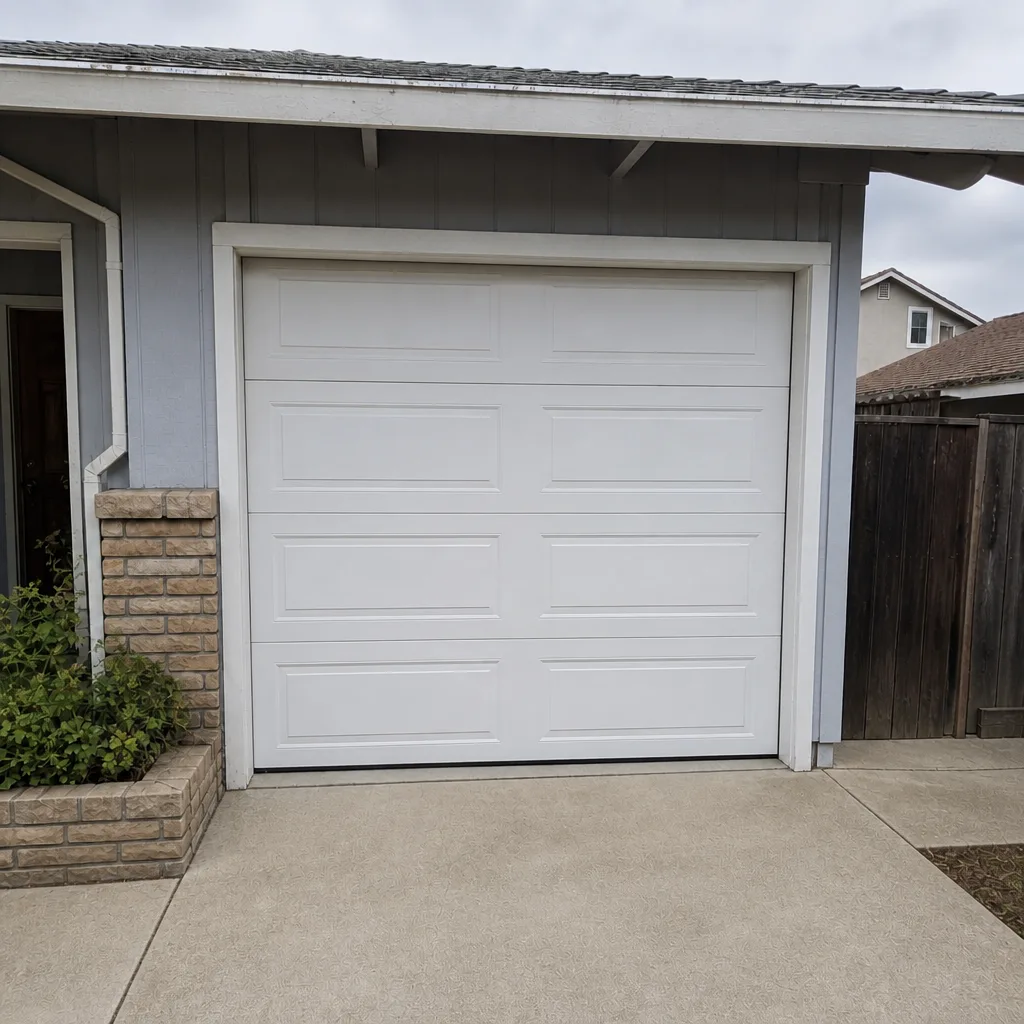
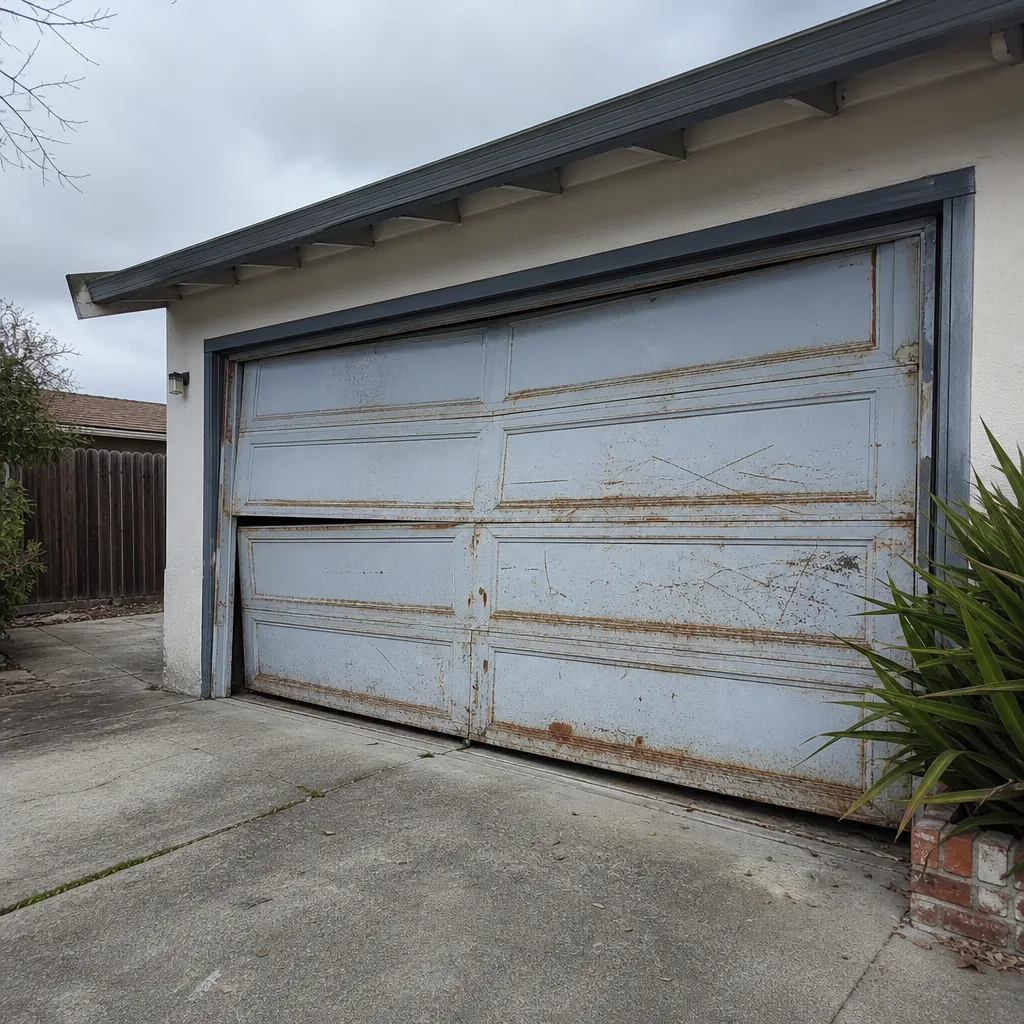
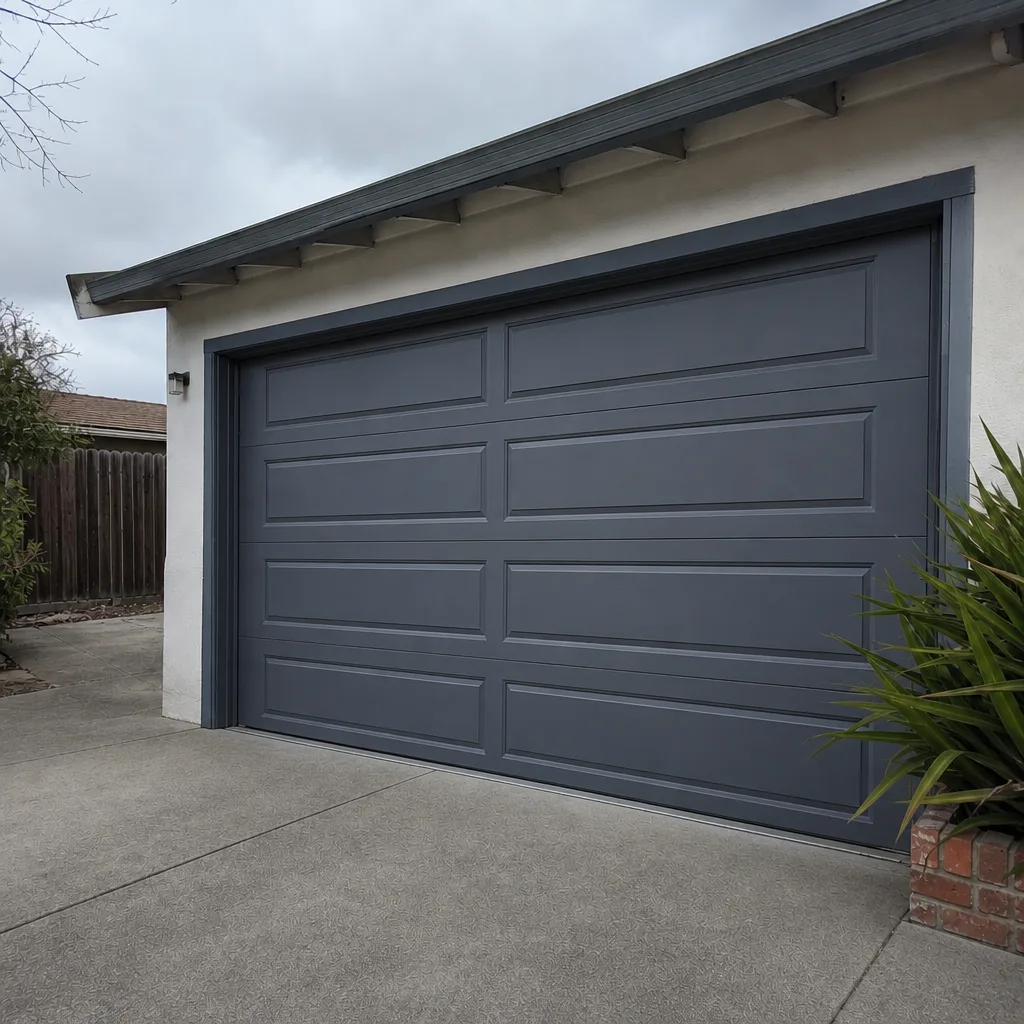
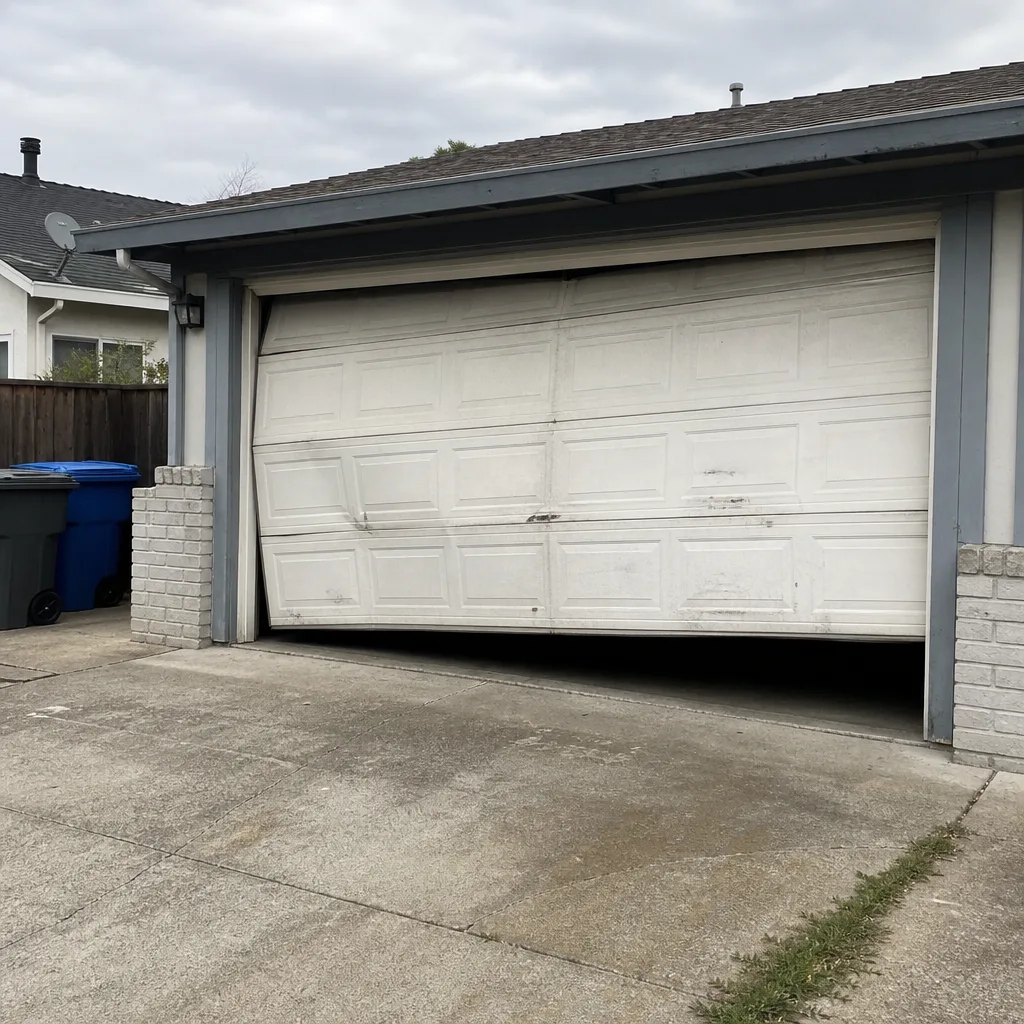
See the difference
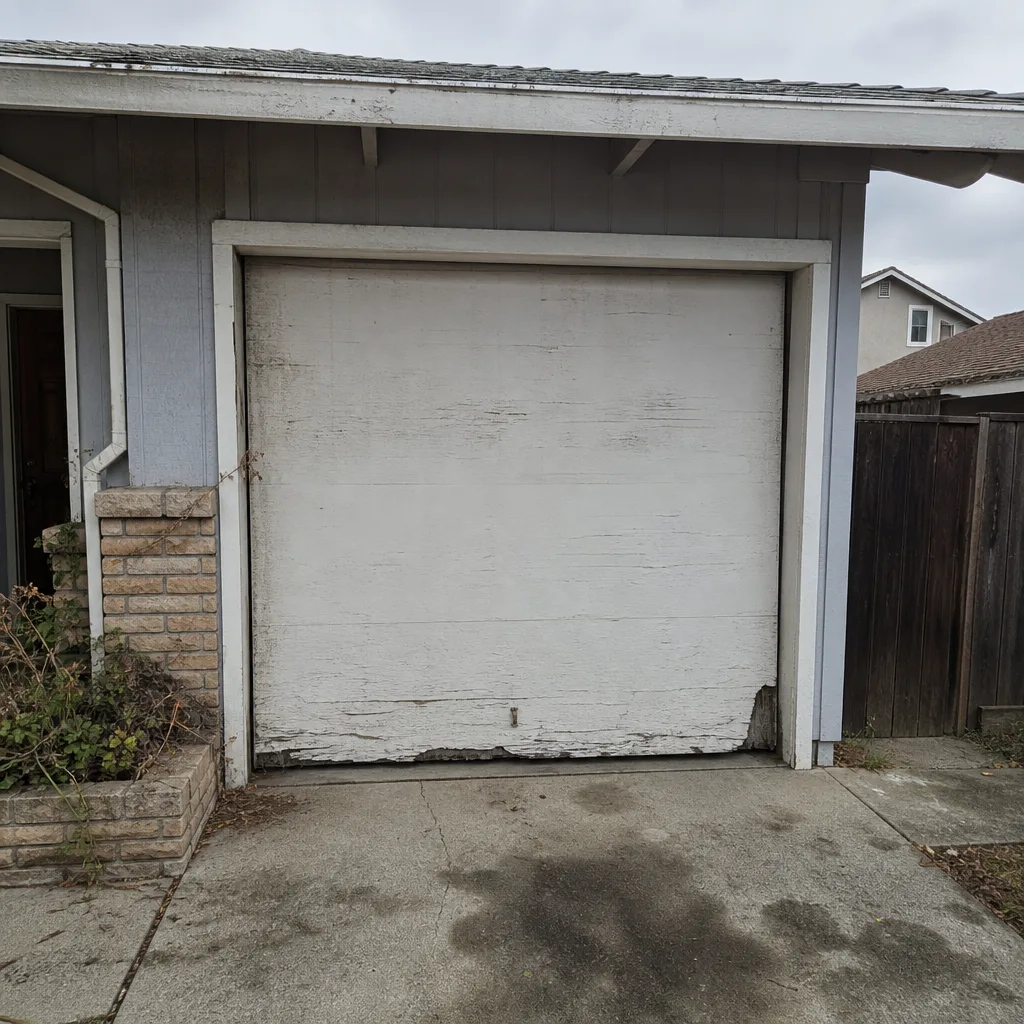 Before
 After
 Before
 After
 Before
 After
A 12-Month Garage Door Care Calendar for Livermore
This calendar maps garage door maintenance to the actual weather we get in the Tri-Valley. It’s not a generic template with winterization steps that don’t apply here. Each month has one or two focused tasks, and most take less than 20 minutes.
- January: After morning fog, check the bottom seal for water wicking under the door. If the inside slab is damp behind the seal, plan a seal replacement.
- February: Inspect hinges and track brackets for early rust bloom. Clean light rust and coat the hardware if needed.
- March: Test door balance by pulling the release handle and lifting the door manually. It should stay open at waist height and close slowly when released.
- April: Clean the tracks and inspect rollers. Replace any rollers with flat spots. Wipe down the opener motor housing to remove winter dust.
- May: Before the first heat wave, check the photo-eye alignment and test the opener’s auto-reverse function with a roll of paper towels on the floor.
- June: Inspect the bottom seal for heat damage. Look for cracked or brittle sections, especially at the corners.
- July: During heat waves, open the garage for ventilation in the evening if possible. Listen for an opener that cycles off and on during operation.
- August: The hottest month. Check the seal again. Schedule any overdue opener repairs before fall wind season begins.
- September: Tighten all hinge bolts and track brackets. Inspect weatherstripping around the door frame. Prep for Diablo winds.
- October: After the first wind event, check the door for new rattles or movement. Look for rollers that have shifted in the track.
- November: Re-check door balance as temperatures settle into the 50s and 60s. Inspect the bottom seal after the first storm.
- December: Wipe down the interior door face on foggy mornings. Check for condensation and note whether it appears regularly enough to warrant an insulated door.
Common Mistakes to Avoid
- Greasing the tracks. Garage door tracks are designed to run dry. Grease attracts dust from the Livermore valley floor and turns into grinding paste. Wipe the tracks, never lubricate them.
- Replacing one spring at a time. Torsion springs are installed in matched pairs. When one breaks, the other has the same cycle count and will fail soon. Replacing only one means doing the job twice and paying twice for the labor.
- Ignoring a door that reverses during heat waves. An opener that overheats and reverses is telling you something. Repeated thermal overload failures eventually kill the motor. A quick inspection beats a sudden opener replacement.
- Treating a noisy door with spray lubricant. Spray lube masks the sound for a few days, at best. Noise usually comes from worn rollers, loose hinges, or a failing bearing plate. Fix the source.
- Assuming all wind damage is visible. Diablo wind stress often shows up later as a door that suddenly binds or a roller that pops out weeks after the storm. Check the door after every significant wind event, not just when something breaks.
When to Call a Professional
A visual inspection and basic hardware tightening are safe for a homeowner. But some things should end the DIY session immediately. A broken torsion spring is the big one. The spring is wound under enough tension to cause serious injury, and we don’t recommend touching it. A second red flag is a door that has slipped off its track or a roller that has popped out. Forcing the door back into place usually bends the track. Third, an opener that sparks, smokes, or smells of burning plastic is an electrical failure waiting. Finally, a panel with visible rust blisters or a crack around the hinge mounts is a structural issue, not a cosmetic one, and it will get worse. Garage Door Repair Livermore offers free estimates in Livermore. Call (833) 593-6272. We answer 24/7. Fast dispatch from 7am to 7pm, Sunday through Friday.
Frequently Asked Questions
Twice a year is enough for a visual inspection and light maintenance in Livermore, once in March or April after the rain, and once in September or October before the Diablo winds. Homes with older doors or heavy use may benefit from a check every quarter. The calendar above breaks it into monthly tasks if you’d rather stay ahead of it steadily.
Yes, the sustained summer heat affects the rubber bottom seal, the photo-eye bracket alignment, and the opener motor’s thermal behavior. These are the three most common heat-related issues we see on Garage Door Repair Livermore calls in July and August. The good news is all three are detectable with a quick inspection before a full failure.
Most homes don’t need a wind-rated door, but homes in exposed positions in eastern Livermore and along the wind corridors near the foothills may benefit. If the current door is being replaced anyway, spending a little extra on a reinforced door from a manufacturer like Amarr or Wayne Dalton is a sensible long-term investment. If the door is solid, fall prep is mostly about tightening hardware and checking the seals.
In most cases, yes. We carry common parts for garage door repair and most standard openers on the truck. Call (833) 593-6272 for a specific schedule. We answer 24/7. Fast dispatch from 7am to 7pm, Sunday through Friday.
No, not on our end. We provide a written estimate before any work starts, and that’s the price. If the job reveals a larger issue, we’ll discuss it and give you a new written estimate before proceeding. You’ll never pay for work you didn’t approve.
Not usually. Rust on hinges, brackets, and track hardware is treatable if it hasn’t pitted deeply. Rust on the door panels themselves is more serious, because panel rust often spreads under the paint film before it’s visible. A specialist can tell you whether a panel is repairable or needs replacement.
The Bottom Line
Livermore’s garage door maintenance calendar runs on heat, wind, and damp, not freeze and thaw. Check the seals and opener behavior in summer, tighten hardware and prep for wind in fall, watch for condensation and rust in winter, and do a thorough moisture inspection after spring rain. Most of this is free and takes less than half an hour. The outlier is the annual pattern of little neglects that become a broken spring, a bent track, or a dead opener. If you’re more comfortable having a specialist look, Garage Door Repair Livermore serves Livermore with free estimates and brand-specific knowledge across LiftMaster, Chamberlain, Genie, Clopay, Amarr, Wayne Dalton, Craftsman, and Raynor. Call (833) 593-6272.
Written by the team at Garage Door Repair Livermore, serving Livermore since 2012.